
Living in the Upper Midwest means facing all four seasons at full force, from winter snow and ice to spring and summer hail, straight-line winds, and thunderstorms. Standard homeowners insurance covers many of these weather events, but not all of them, and the details decide what you actually recover after a storm. This guide explains what your policy covers, how storm claims work, why Midwest homes need specialized protection, and how to choose the right coverage.
Key Takeaways
- Standard homeowners insurance covers sudden, accidental damage from wind, hail, lightning, and the weight of ice and snow.
- Flood and sewer backup are not covered by a standard policy and require separate coverage.
- Roof claims often turn on whether your policy pays replacement cost or depreciated actual cash value, especially on older roofs.
- Many Upper Midwest policies carry a separate wind and hail deductible, often a percentage of your home’s value.
- Documentation and an annual policy review help you avoid coverage gaps before storm season.
- A local independent agency can match coverage to real Upper Midwest weather risks.
Cost and claim figures in this guide reflect published industry data and are illustrative. Your coverage and settlement depend on your policy, insurer, and the facts of each claim.
What Does Homeowners Insurance Cover for Weather Damage?
Standard homeowners insurance covers sudden and accidental weather damage from wind, hail, lightning, falling objects, and the weight of ice, snow, or sleet. It does not cover gradual wear or damage from deferred maintenance.
When a covered storm strikes, different parts of your policy respond:
- Dwelling coverage pays to repair your home’s structure, such as a roof stripped by hail or siding cracked by wind.
- Other structures’ coverage applies to detached garages, sheds, and fences.
- Personal property coverage pays for belongings damaged by a covered event, such as electronics ruined by a lightning surge.
- Loss of use coverage reimburses added living costs, such as a hotel stay, when a storm leaves your home uninhabitable.
Each of these applies after your deductible and up to your policy limits. If a roof was already deteriorating before the storm, an insurer may reduce or deny the portion tied to prior wear.
Winter Weather Risks in Minnesota and South Dakota
Winter brings a different set of claims: ice dams, frozen pipes, and roof strain from heavy snow. Coverage often depends on whether the damage was sudden and accidental rather than the result of neglect.
Ice Dams and Roof Damage
Ice dams form when melting snow refreezes at the roof’s edge and traps water under the shingles. If that water seeps inside and causes interior damage, your policy may respond, though the insurer may review whether adequate insulation or maintenance could have prevented it.
Frozen and Burst Pipes
If pipes freeze and burst suddenly, the resulting water damage is usually covered. Coverage may be limited if the home was left unheated or vacant without reasonable precautions, since that shifts the cause toward neglect.
What Homeowners Insurance Does Not Cover
Several weather-related risks common to the Upper Midwest fall outside a standard policy and require separate coverage or an endorsement.
Flood Damage
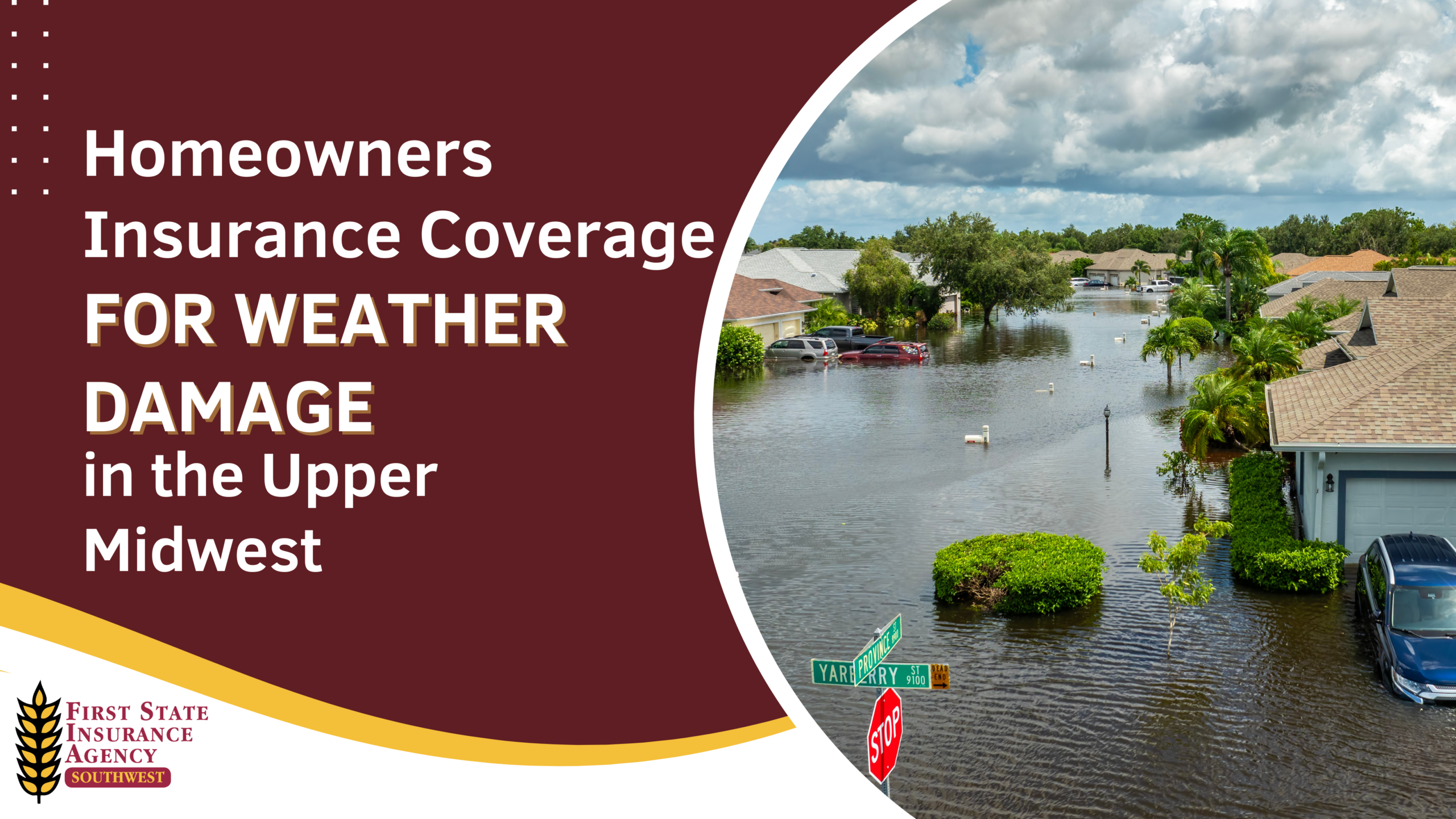
Standard homeowners insurance does not cover flood damage from rising water, heavy rain accumulation, or overflowing rivers. Flood coverage must be purchased separately through the National Flood Insurance Program or a private insurer. Areas well outside mapped flood zones have flooded from rapid snowmelt and heavy rainfall, so location alone does not remove the risk.
Sewer Backup
When municipal systems are overwhelmed during heavy rain, a sewer backup can cause serious interior damage. This is usually excluded unless you add a sewer backup endorsement.
Earth Movement
Damage from earthquakes or ground movement is generally excluded. It is less common in the Midwest, but certain soil conditions can create shifting concerns that an earth-movement endorsement can address.
How Storm Damage Claims Work
A storm claim moves through a predictable sequence: document the damage, file promptly with your insurer, meet the adjuster, and receive payment after your deductible. Two policy details decide how much you actually recover.
Replacement cost versus actual cash value. This is the most important detail on a roof claim. A replacement-cost policy pays what it costs to replace the damaged roof today. An actual cash value policy pays the depreciated value, subtracting the roof’s age and wear, which can leave a large gap on an older roof. Confirm which basis your policy uses before a storm, since many Upper Midwest policies apply actual cash value or a roof-age schedule to roofs.
Your deductible structure. Many Midwest policies carry a separate wind and hail deductible that is higher than your standard deductible, often set as a percentage of your home’s insured value. On a home insured for $400,000 with a 2% wind and hail deductible, you would pay the first $8,000 of a covered roof claim yourself. A matching issue can also arise when only part of a roof or siding is damaged and replacement materials no longer match; a matching endorsement addresses that gap.
Why Midwest Homeowners Need Specialized Coverage
The Upper Midwest sits in one of the country’s most active regions for severe convective storms, the systems that produce hail and straight-line wind. Wind and hail are the most common property insurance claims nationally, and they average more than $14,700 per claim. Severe convective storms have grown more costly, running the US insurance industry an average of about $42 billion per year from 2020 to 2024, more than quadruple the level of two decades earlier.
That rising loss trend is why carriers in Minnesota and South Dakota increasingly attach wind and hail deductibles and apply actual cash value settlement to roofs. Specialized coverage for this region means confirming your roof is written on a replacement-cost basis, understanding your wind and hail deductible, and adding endorsements for flood, sewer backup, or material matching where they fit your home. If you run a home-based business, storm damage to business property may also need its own endorsement.
Preventative Measures That Support Claims
Insurance responds to sudden events, not preventable deterioration, so maintenance protects both your home and your claim. Maintaining your roof, cleaning gutters, insulating pipes, and trimming trees near the house can reduce how often you file and strengthen your position when you do.
Documentation matters just as much. Photograph your property once a year and after any improvement, and keep receipts for major repairs and upgrades. These records establish the condition of your home before a storm and make the difference between a smooth settlement and a disputed one.
How to Choose the Right Homeowners Insurance Coverage
You choose the right coverage by matching your policy to Upper Midwest risks rather than accepting a default quote.
- Set your dwelling limit to full replacement cost, not market value, so a total loss rebuilds the home.
- Confirm your roof is written on a replacement-cost basis, or understand the tradeoff if it is actual cash value.
- Review your wind and hail deductible and make sure the out-of-pocket amount fits your budget.
- Add endorsements that fit your exposure, such as sewer backup, flood, or material matching.
- Compare carriers through an independent agency, and review your policy once a year or after any renovation.
Frequently Asked Questions
Does homeowners insurance cover hail damage?
Yes, most standard policies cover hail damage to roofing, siding, and other exterior surfaces, after your deductible. How much you recover depends on whether your policy pays replacement cost or depreciated actual cash value, which matters most on older roofs. Many Upper Midwest policies also apply a separate, higher wind and hail deductible to these claims. Reviewing both details before storm season prevents surprises at settlement.
Is flood damage included in homeowners insurance coverage?
No. Standard homeowners insurance excludes flood damage from rising water, heavy rain accumulation, and overflowing rivers. Flood coverage must be bought separately through the National Flood Insurance Program or a private flood insurer. This matters in Minnesota and South Dakota because rapid snowmelt and heavy rain have flooded homes well outside mapped flood zones.
Are ice dams covered by insurance?
Damage from ice dams may be covered when it is sudden and accidental, such as water that seeps under shingles and damages an interior ceiling. Insurers may review whether adequate attic insulation, ventilation, or maintenance could have prevented the buildup. Gradual seepage or long-term moisture problems are typically treated as maintenance issues and excluded. Keeping gutters clear and the attic properly insulated both reduces the risk and supports a claim.
Does insurance cover fallen trees?
If a storm knocks a tree onto your home or another insured structure, your policy typically covers the resulting damage and the cost to remove the tree from the structure. If a tree falls in your yard without hitting anything, removal is usually limited or excluded, though some policies help if it blocks a driveway or accessible entrance. Damage to a vehicle from a fallen tree is handled under your auto policy’s comprehensive coverage, not your home policy. A deductible applies in each case.
How often should I review my homeowners policy?
Review your homeowners policy at least once a year, and again after any major renovation. An annual review confirms your dwelling limit still reflects current rebuilding costs, which have risen with material and labor prices. It is also the moment to check how your roof is settled, what your wind and hail deductible is, and whether you need to add flood, sewer backup, or matching coverage. A local independent agent can run this review and compare carrier options.
Protect Your Home Against Midwest Weather
Understanding your coverage matters most in a region known for hail, high winds, and hard winters. The difference between a full recovery and an expensive surprise usually comes down to policy details set long before the storm.
First State Insurance works with homeowners to review policies, adjust coverage limits, and add endorsements that reflect real regional risks. As an independent agency, the focus is on clear explanations, competitive carrier options, and protection built for the Upper Midwest. Before the next storm season, contact First State Insurance to review your coverage and get guidance tailored to your home and location.
Disclaimer: This article is provided for general educational purposes only and is current as of the publication date shown above. It is not insurance, financial, or legal advice, and it does not create an agent-client or professional relationship. Homeowners insurance coverage, exclusions, endorsements, deductibles, and roof settlement terms vary by insurer, policy form, state, and individual circumstances. Descriptions of what is covered or excluded are general and do not alter the terms of any actual policy; coverage for any specific loss depends on the language of the policy issued to you. The claim and loss figures cited are drawn from published industry data and are illustrative, not quotes or guarantees. Consult a licensed insurance agent and review your own policy before relying on any information here.
Disclosure: First State Insurance is a licensed independent insurance agency serving homeowners in [South Dakota and Minnesota]. This article relates to coverage the agency helps place, and its purpose includes informing homeowners who may be reviewing or purchasing coverage. As an independent agency, First State Insurance compares policies from multiple carriers rather than representing a single insurer. Readers should review their own policy and request a personalized quote before making coverage decisions.